
Systems That Run Daily Need More Than Occasional Checks
Commercial HVAC Maintenance in Austin for restaurants, offices, and retail spaces running equipment under sustained high-occupancy conditions
Restaurants, offices, and retail spaces in the Austin metro run HVAC systems for longer hours and under higher occupancy loads than any residential installation. A rooftop unit serving a full-service restaurant kitchen operates differently than one cooling a three-bedroom house, and it degrades differently too. Extreme Texas Air provides scheduled commercial HVAC maintenance for businesses where an unplanned shutdown during peak hours costs real money, not just discomfort.
Each maintenance visit follows a structured checklist rather than a technician's memory. Filters are inspected and replaced or cleaned, coils are cleaned to restore heat transfer efficiency, refrigerant levels and electrical components are checked, controls and thermostats are tested, condensate drains are cleared, and belts and motors are inspected for wear. At the end of the visit, the business receives a written summary of what was done and what was flagged—without pressure to approve additional work on the spot.
Schedule a maintenance visit for your Austin location by calling Extreme Texas Air to discuss service frequency based on your building type and system hours.
How Maintenance Addresses Commercial System Degradation
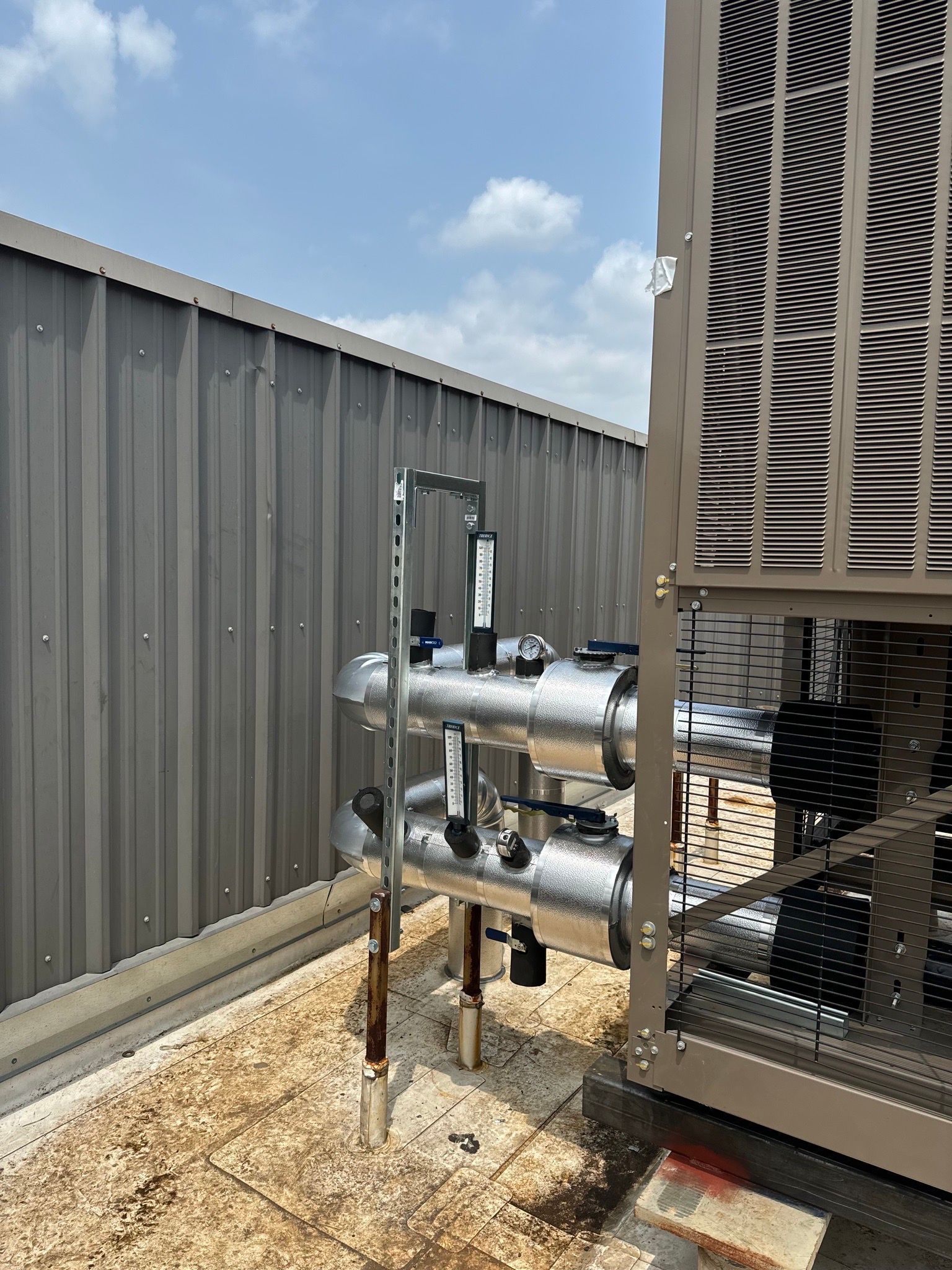
Commercial HVAC degradation follows a predictable sequence that a structured maintenance schedule interrupts before it becomes a repair call. Dirty coils reduce heat transfer efficiency and force the compressor to work harder; clogged condensate drains back up into the drain pan and eventually the ceiling; worn belts on air handlers slip before they snap. In Leander and Buda commercial buildings where rooftop systems serve multi-tenant retail or office space, these failure patterns show up faster when systems run the extended hours common to those uses.
After a maintenance visit, the observable difference is typically airflow volume and temperature consistency. A coil that was restricting airflow delivers more supply air once cleaned, and a system that was running at reduced refrigerant charge will hold setpoint more reliably. Extreme Texas Air documents those findings so the business has a service record showing exactly what condition the equipment was in at each visit.
The service summary provided after each visit distinguishes between items corrected during the visit and items that may need attention before the next scheduled service. That separation lets the business owner make an informed decision about priority repairs without conflating routine maintenance with upsell pressure.
What Property Owners Ask About the Work
Businesses with rooftop or split systems often have questions about what a maintenance visit actually covers and how to tell whether it was done thoroughly. The answers below reflect the checklist Extreme Texas Air follows on every commercial visit.
What does coil cleaning actually involve during a commercial maintenance visit?
The technician applies a foaming or no-rinse coil cleaner to both evaporator and condenser coils, allows dwell time for the solution to break down debris, and removes the buildup that was reducing heat transfer across the coil surface.
How often should a commercial HVAC system be serviced in a high-occupancy environment?
Most commercial systems in restaurants and retail spaces benefit from quarterly visits because the filter load and coil fouling accumulate faster than in a lightly occupied office, where semi-annual service may be sufficient.
Why does a clogged condensate drain create more damage than it appears to?
When the primary drain is blocked, the overflow goes into the drain pan and eventually through the ceiling assembly, damaging insulation, ceiling tiles, and in some buildings the electrical systems below the rooftop unit.
What should a written maintenance summary include for a business to use it effectively?
The summary should list every item checked, the condition found, the action taken, and any item that was outside acceptable range at the time of the visit so the business can track trends across multiple service calls.
How does refrigerant charge affect system performance in a way a business owner would notice?
A system running low on refrigerant charge pulls longer cycles to reach setpoint, raises indoor humidity above comfortable levels, and in advanced cases freezes the evaporator coil—which causes a complete loss of cooling that looks like a mechanical failure.
Extreme Texas Air also provides commercial HVAC maintenance in Kyle, Buda, San Marcos, Dripping Springs, and Lockhart. To set up a maintenance schedule for your building, call (512) 256-5499 with your system type and the number of units on site.